About the Draft Concepts

This page introduces all of the draft concepts for the three points of interest being explored for Medicine Hill / Paskapoo Slopes, including the Forest Edge, Erratic, and Forest Pond. Together, these concepts explore different ways people could experience, learn from, and move through the park.

The options shown are not final designs, and you are not being asked to choose one over another. Instead, we want to understand which elements you like, what concerns you, and what feels most appropriate for this place. Click the images to view a larger version and explore the concepts in more detail.

Your feedback will help refine these ideas and inform the development of a preferred approach for the park.


Forest Edge Concepts

  • The Forest Edge is a key entry point into Medicine Hill / Paskapoo Slopes from the Paskapoo parking lot.

    This point of interest is intended to:

    • Provide a welcoming and more accessible entry into the park
    • Improve wayfinding and orientation from the parking area
    • Offer opportunities for education and gathering near the trailhead


    Below are two options that we believe will accomplish the objectives outlined above:
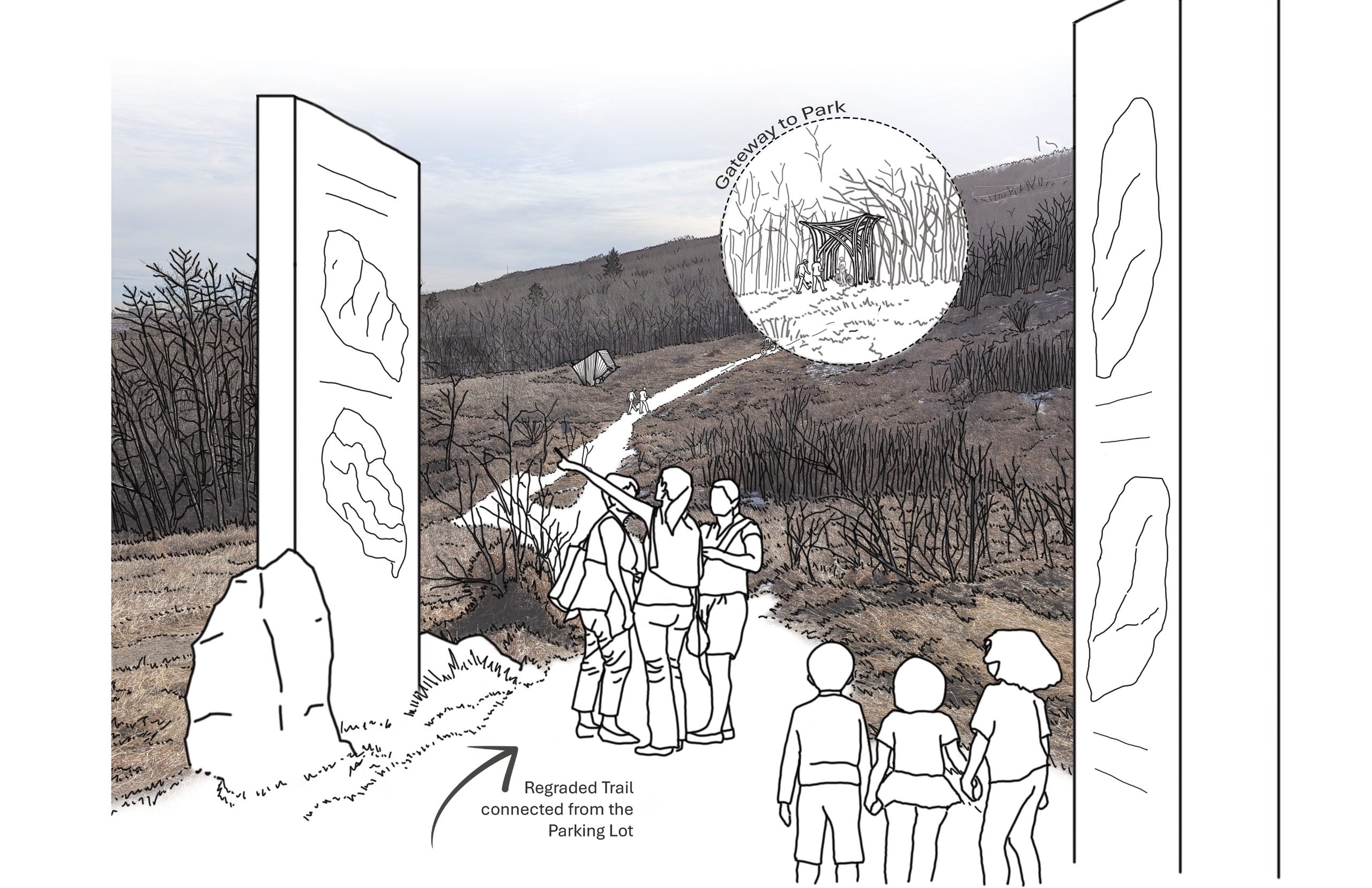
Gateway (Concept A)

The Gateway option, with the addition of a re-graded and accessible connection, provides a gradual transition from the parking lot into the natural landscape, creating a sense of leaving the city behind and entering a special space.

This option emphasizes:

  • A minimal, nature‑first arrival experience with strong visual connections to the nearby grassland and forests
  • Wayfinding and accessibility upgrades to the trail
  • Interpretive signage and art that introduces the land’s natural and cultural significance

Pavilion (Concept B)

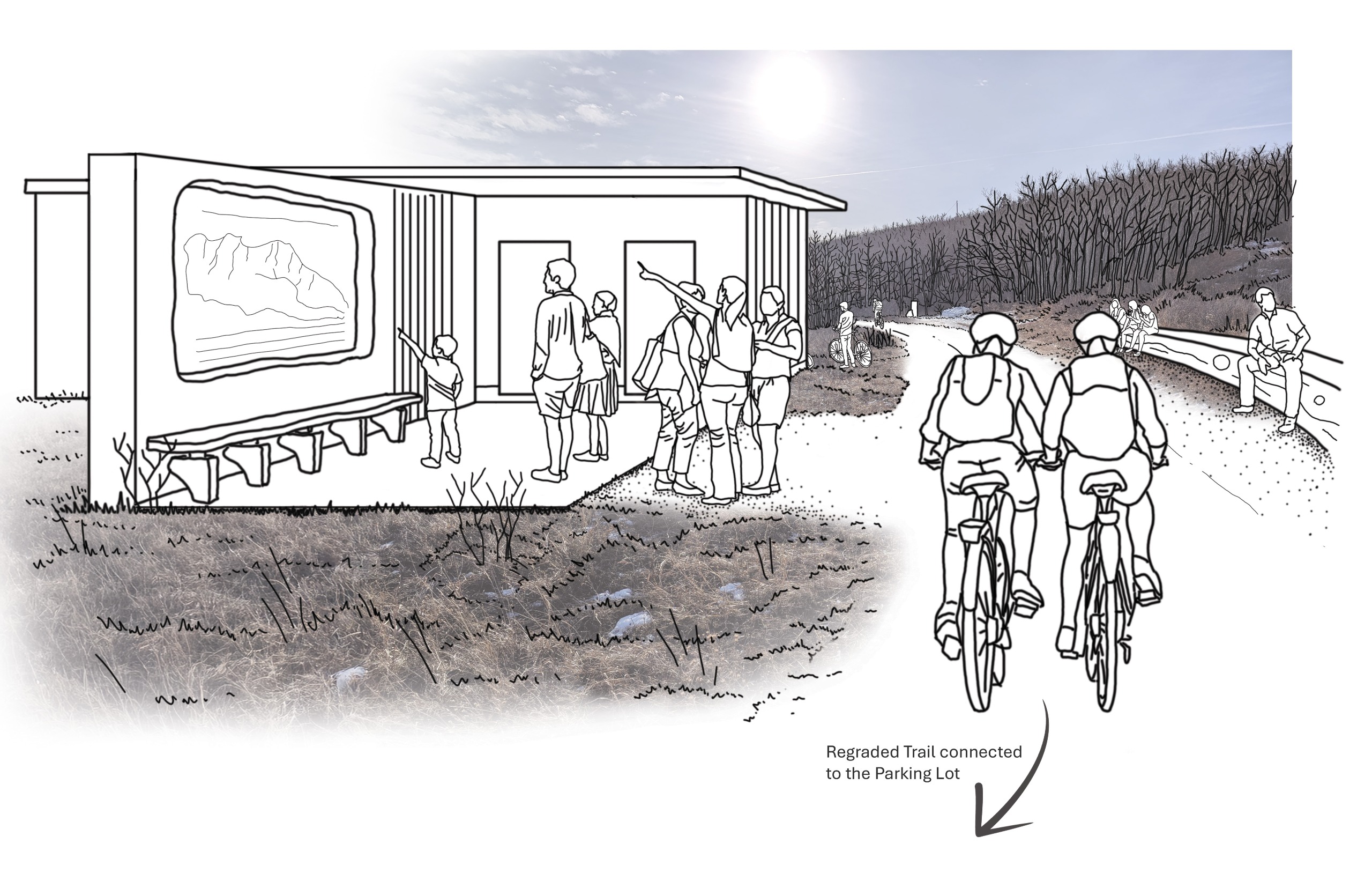
The Pavilion option expands the entry with amenities to help visitors prepare for their visit in a new gathering space at the forest edge, acting as a “foyer” between the city and the park.

This option emphasizes:

  • Expanded opportunities for education on ecology
  • Enhanced trail experience through a rest stop and potential amenities like bike parking
  • A well-defined starting point with interpretation/storytelling, orientation, and potential to support stewardship groups (e.g., equipment storage)

Erratic Concepts

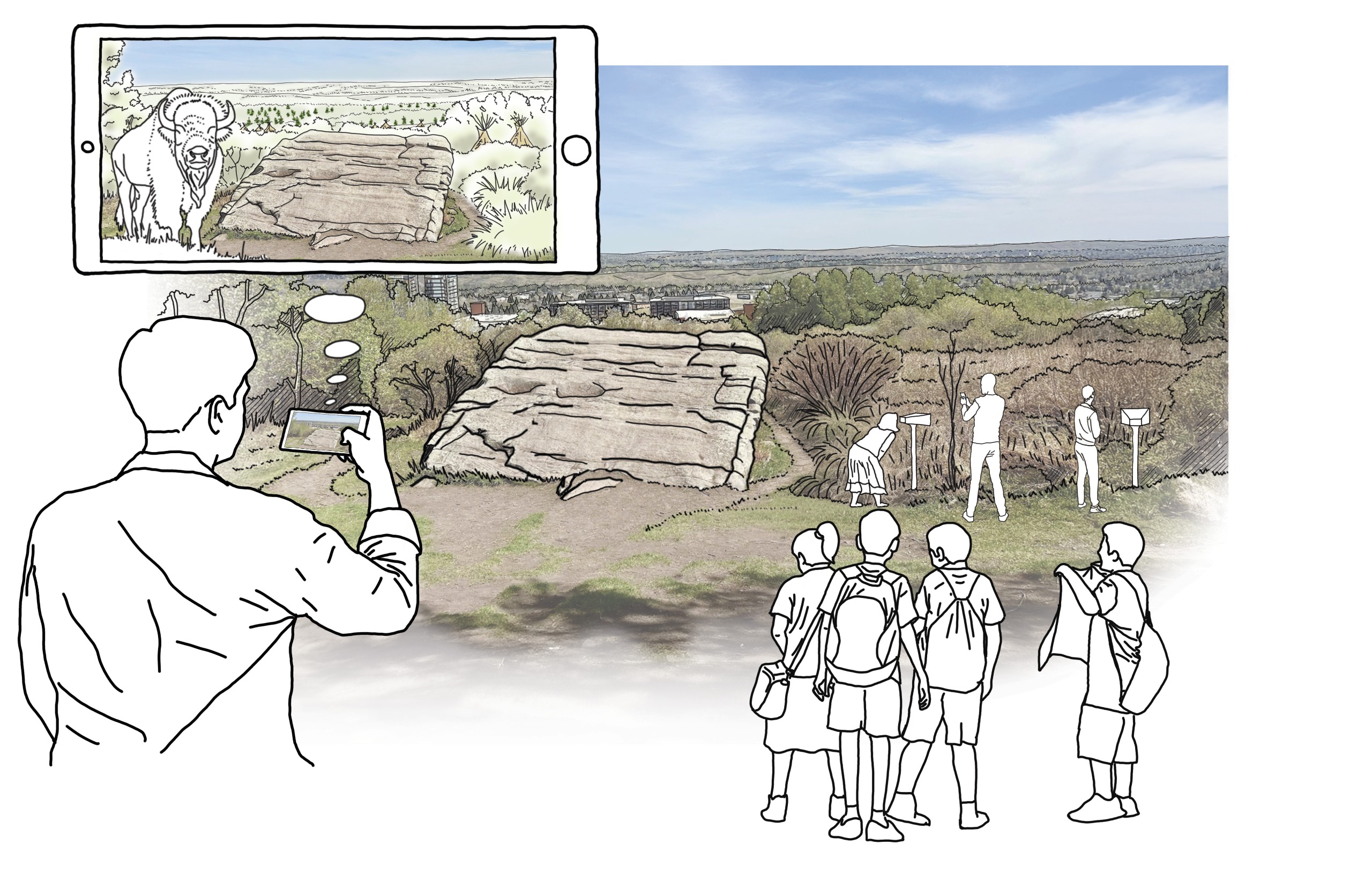
  • The Erratic, also known as Big Rock, is a large, well-known glacial rock located at the centre of the park.

    This point of interest is intended to:

    • Support learning and storytelling connected to the land and its history
    • Provide opportunities for gathering and reflection
    • Help visitors connect with the significance of the Big Rock and surrounding landscape


    Below are two options that we believe will accomplish the objectives outlined above:
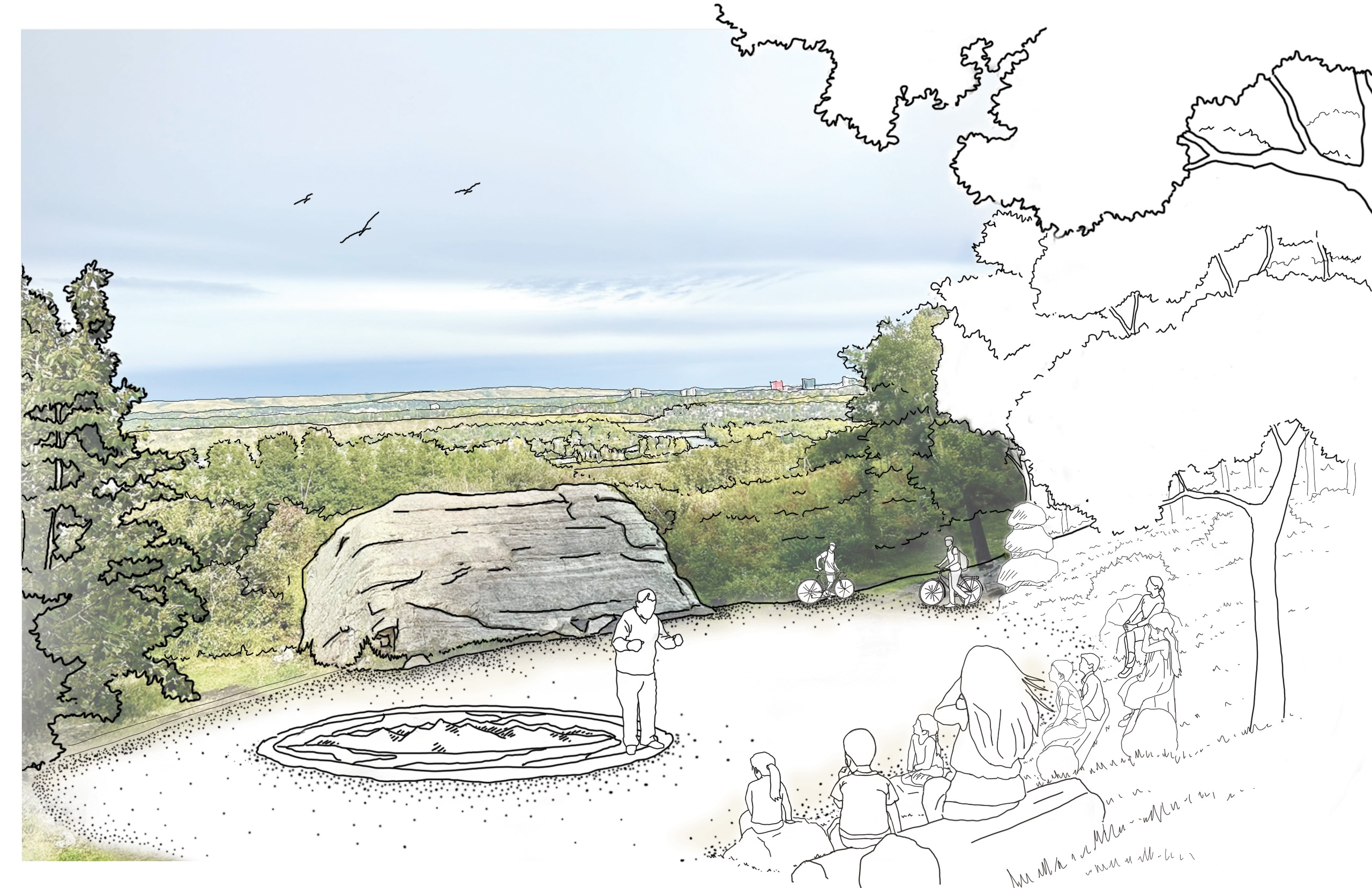
Big Rock Landing (Concept A)

The Big Rock Landing option transforms the area around the Erratic into a defined gathering space. Terraced seating is arranged to face the rock and the river valley beyond, creating a place where people can slow down, gather, and take in the views.

This option emphasizes:

  • Respectful engagement with a significant feature with clear views to the surrounding landscape
  • Encouraging visitors to pause for quiet reflection through the design and materials
  • Small outdoor classrooms, performances, or demonstrations in a central gathering and learning space

Visions of Past & Present (Concept B)

The Visions of Past & Present option takes a lighter-touch approach, using small physical elements and digital storytelling to deepen understanding of the site and experience the past and present together.

This option emphasizes:

  • Minimal physical intervention in the landscape
  • Gently guiding visitors to key views and landscape features using signage, QR codes, or scenic binoculars
  • Storytelling through digital and immersive experiences to share Indigenous voices and experience

Forest Pond

  • The central route through the park is known for its streams, gentle slopes, and quiet character.

    This point of interest is intended to:

    • Create engaging stopping points along the trail
    • Integrate art and interpretation that tell the site’s natural and cultural stories
    • Improve trail comfort and usability while highlighting natural features


    Below are two options that we believe will accomplish the objectives outlined above:
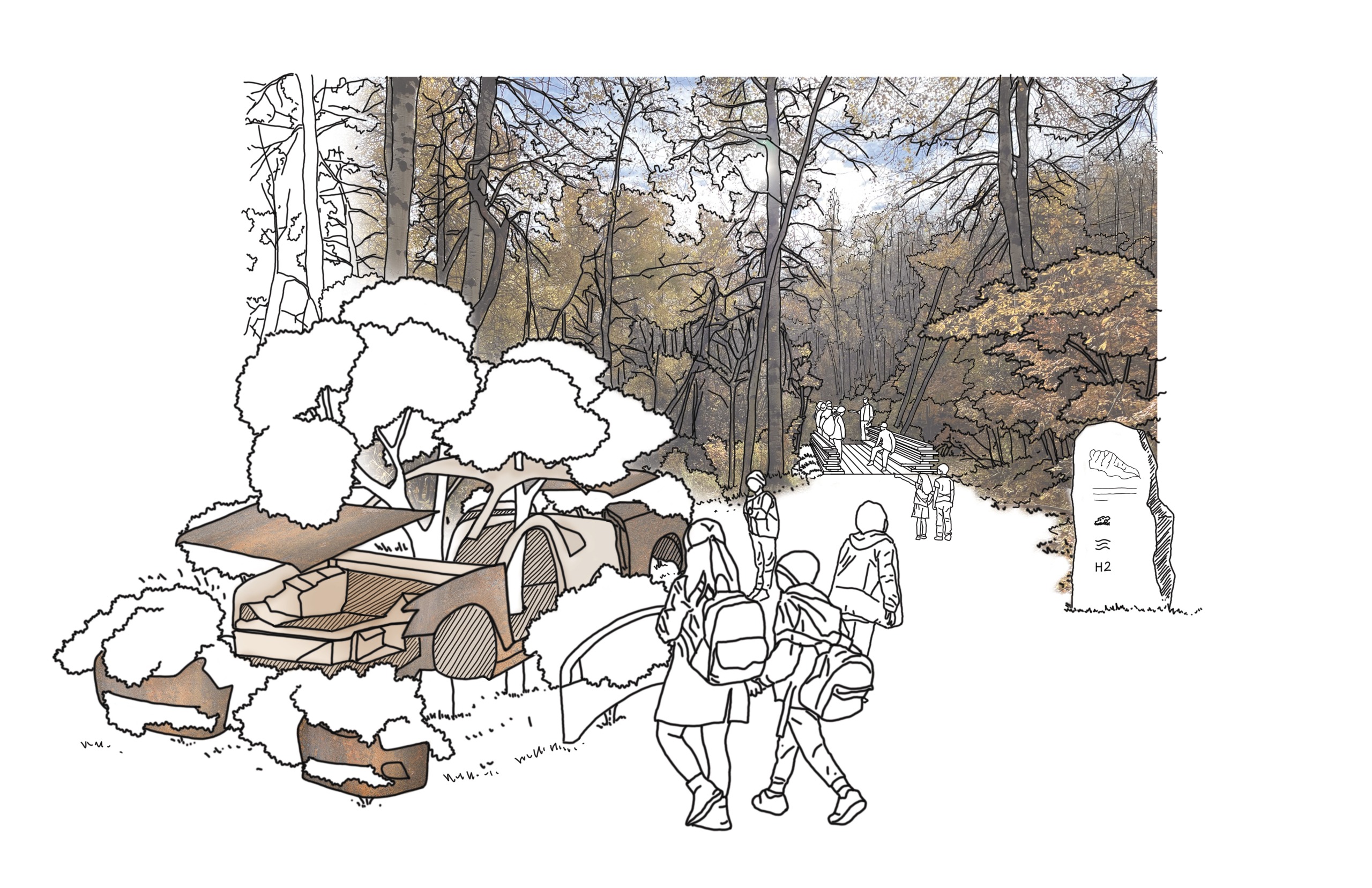
Paskapoo Artifacts (Concept A)

The Paskapoo Artifacts option uses artistic and interpretive objects to tell the story of the land along the trail. These objects are designed to be explored up close, helping visitors connect with the area’s cultural history, ecology, geology, and past uses.

This option emphasizes:

  • Relocating the Cars of Paskapoo from the pond to a new setting along the trail, allowing for a safer and more interactive experience
  • An enhanced interpretive and educational trail experience with seating
  • Clear storytelling about culture, history, and landscape through hands-on learning

Moments of Respite (Concept B)

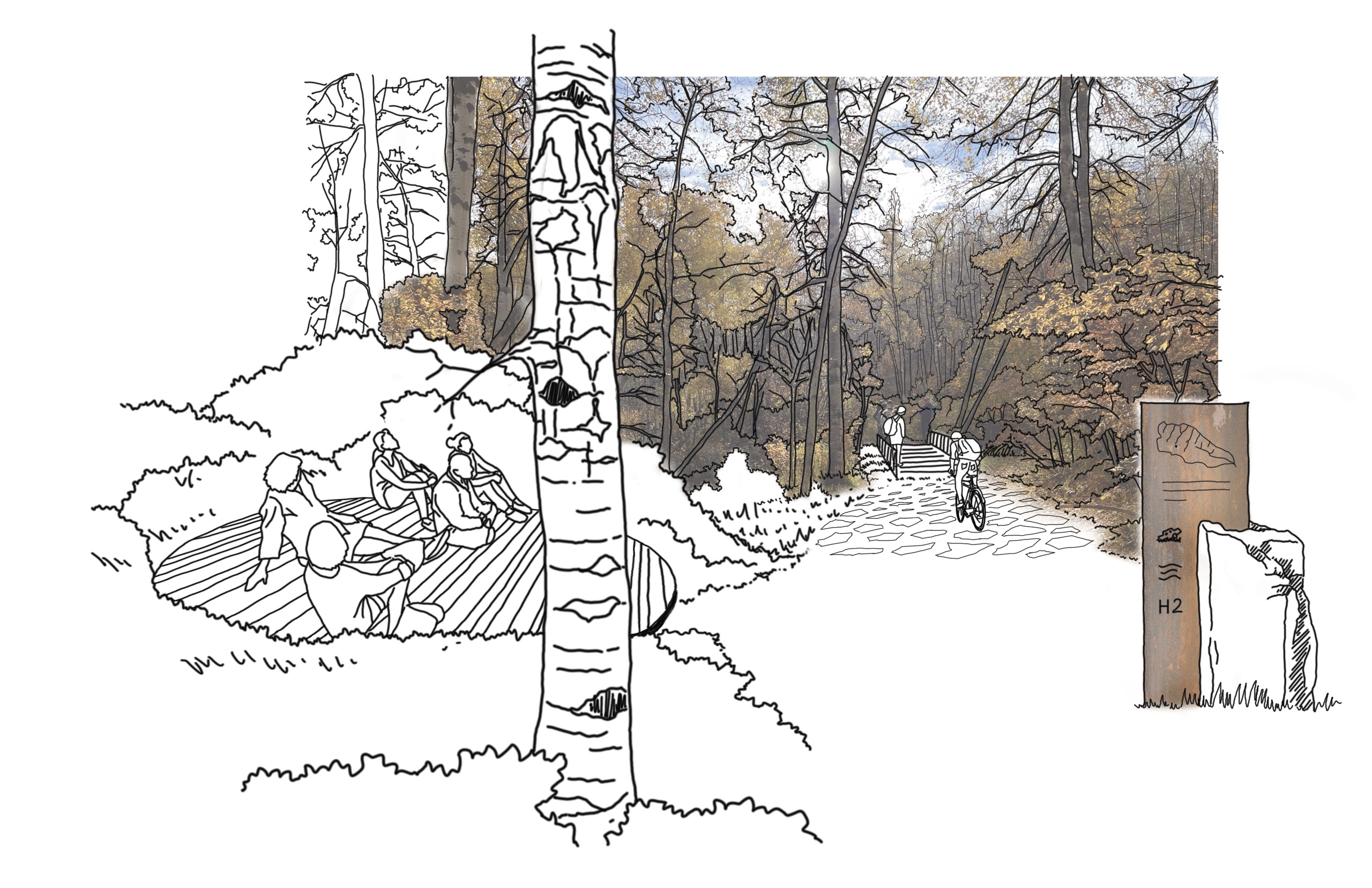
The Moments of Respite option focuses on the natural qualities that already define the trail—especially the streams that flow and cross the path. Design changes are subtle and minimal, drawing attention to water, terrain, and quiet shifts in the landscape.

This option emphasizes:

  • Calm reflective experiences in nature with minimal, low impact design
  • Places to pause and rest for a sensory experience of water and movement
  • The Cars of Paskapoo are reused as creative signage acknowledging the area’s history as Old Bowfort Road

In the spirit of truth and reconciliation, The City of Calgary acknowledges that we live, work, and play on the ancestral and traditional territory of the Blackfoot Confederacy, made up of the Siksika, Piikani, and Kainai First Nations; the Îethka Nakoda Wîcastabi First Nations, comprised of the Chiniki, Bearspaw, and Goodstoney First Nations; and the Tsuut’ina First Nation. The city of Calgary is also homeland to the Métis Nation Battle River Territory – Nose Hill Métis Region 5 & Elbow River District 6. I acknowledge and give gratitude to the many First Nations, Métis, and Inuit who live here and call Calgary home.


You see the results of decisions made by The City of Calgary every day. Get involved and provide your input on City projects and programs. Together we can build a better city.

Contact Us

Have questions or want to learn more about a project, contact us below:

Contact Information
Phone 311 or 403-268-CITY (2489)
Email engage@calgary.ca
Website www.calgary.ca