About the project
This drainage improvement project seeks to alleviate local flooding in the community of Albert Park, between 12 Ave SE to14 Ave SE and 26 St SE to 27 St SE which regularly experiences flooding during intense rainstorms.
This project will create a dry pond in a local green space and make adjacent storm sewer improvements. The project’s goal is to mitigate flood impacts to nearby properties.
Redeveloping Albert Park’s green space is an opportunity for nearby residents to share their thoughts on park amenities.
This drainage improvement is a high priority for the City. We are pleased to be proceeding with detailed design in 2026. Construction is anticipated to begin in 2027.
When it rains, or snow melts, water runs off our streets, driveways, roofs, lanes, yards and parking lots ultimately ends up in our rivers and creeks. This runoff is called stormwater. Stormwater management strives to reduce the impact of flooding, ensure public safety, reduce damage to property and help keep our rivers healthy. Through effective stormwater management, drainage systems can be developed that balance the objectives of maximizing drainage efficiency and minimizing adverse environmental impacts.
Dry ponds are used to temporarily store stormwater runoff. In this case, the dry pond will be a recessed area within the greenspace that will allow for temporary water storage and drainage. Think of it like a bathtub!
Dry ponds do not have a permanent pool of water, which allows them to be used for recreational purposes while the ground is dry (which is most of the time).
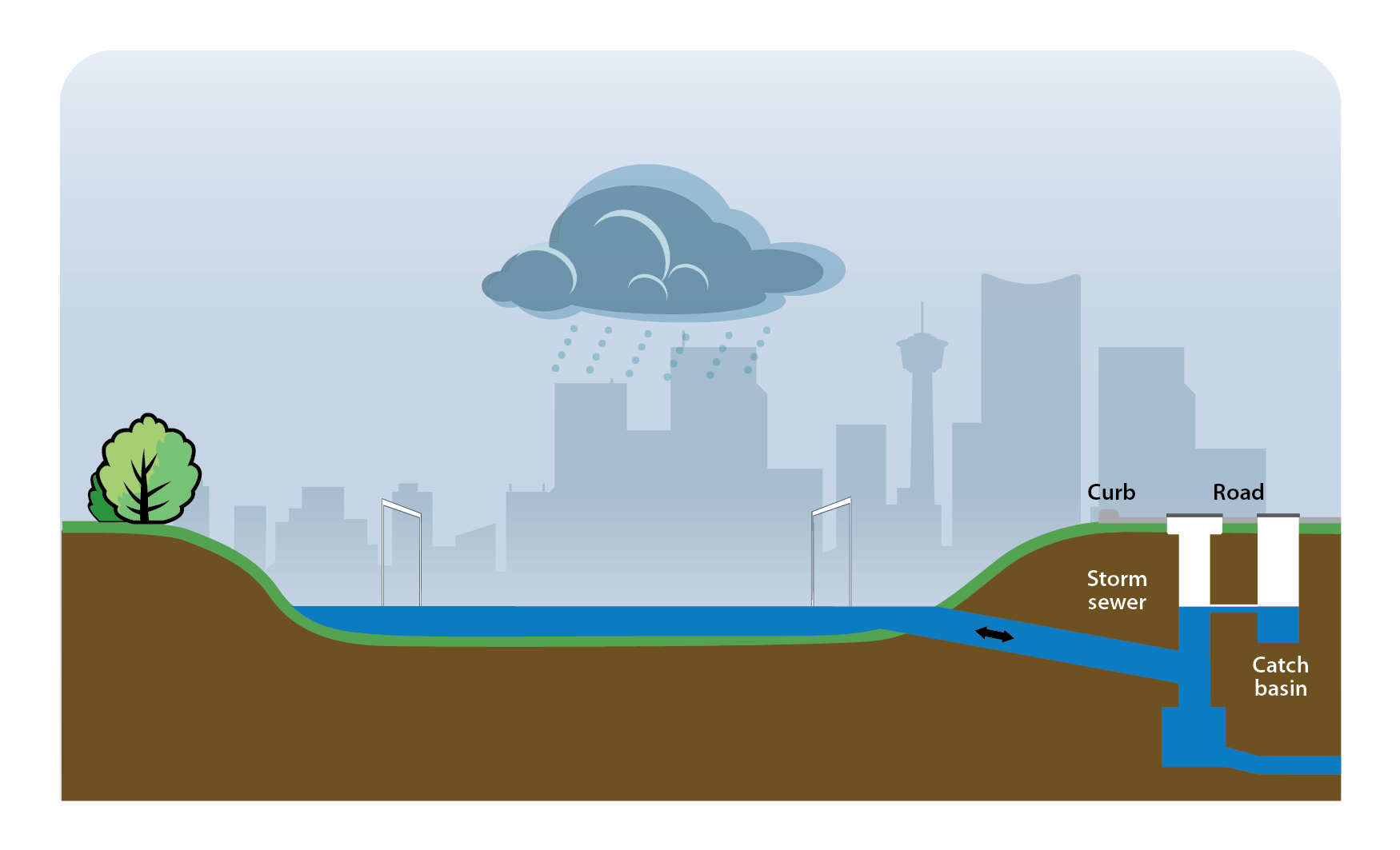
Image 1 shows how a dry pond functions during a heavy rainfall: A dry pond captures stormwater runoff during a rainstorm, as well as water from an underground stormwater pipe. Water collected in a dry pond can take from one to six hours to drain after a storm. This is done by gravity via drains built into the bottom of the pond.
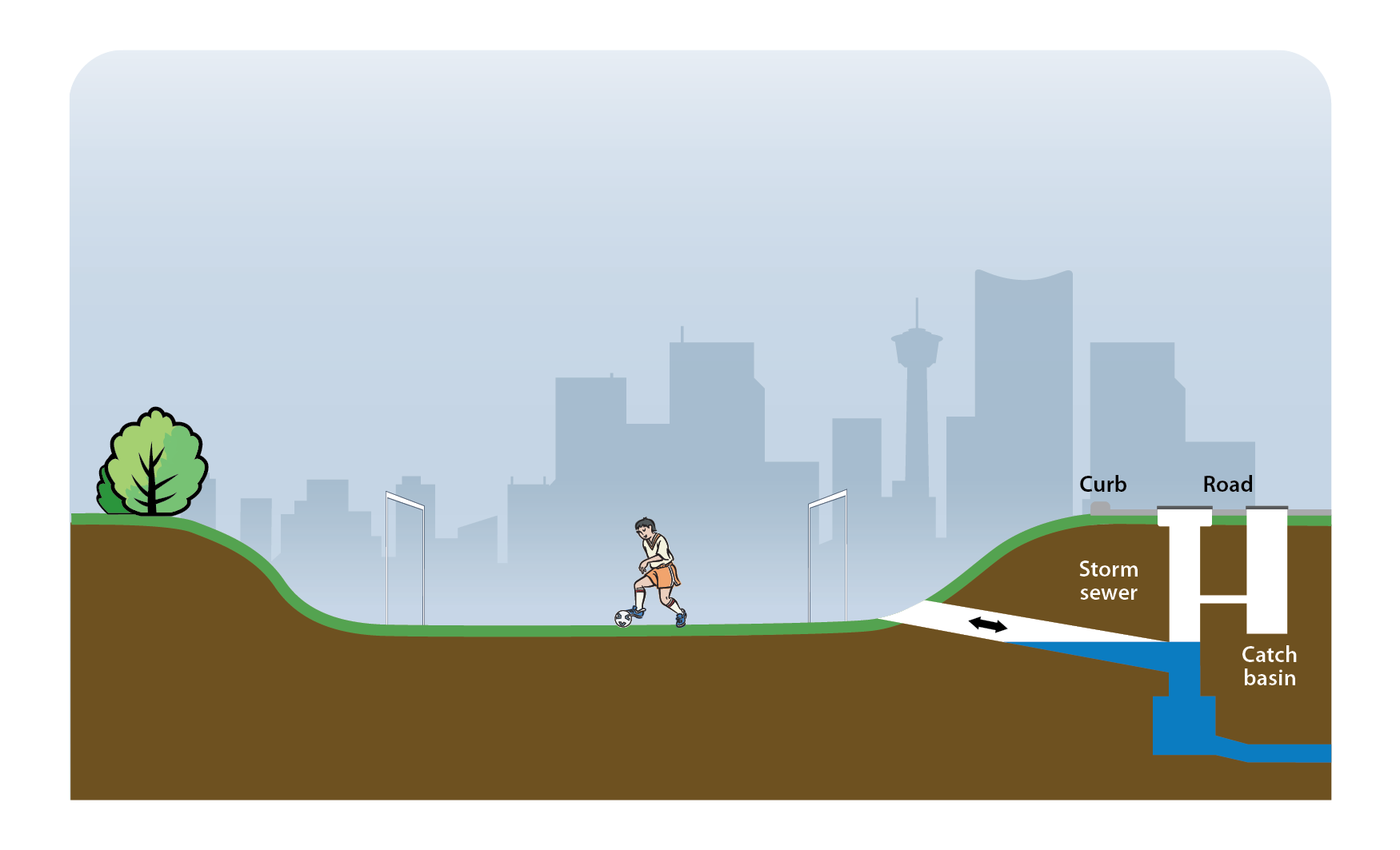
Image 2 shows a depiction of how a dry pond functions before a heavy rainfall: A dry pond can be located on parkland, next to roadways or on recreation or school fields. Once constructed the entire site is fully landscaped to blend into local surroundings, and can continue to be used for sport, recreation or leisure purposes.
What are we wanting to learn from the community?
The image below shows the overall park redesign which balances community use with site constraints such as flooding, utilities, and existing trees. A flexible central lawn functions as stormwater management during peak events and open green space when dry, with retained pathways, key tree preservation, a relocated accessible playground, and inclusive spaces for all ages.
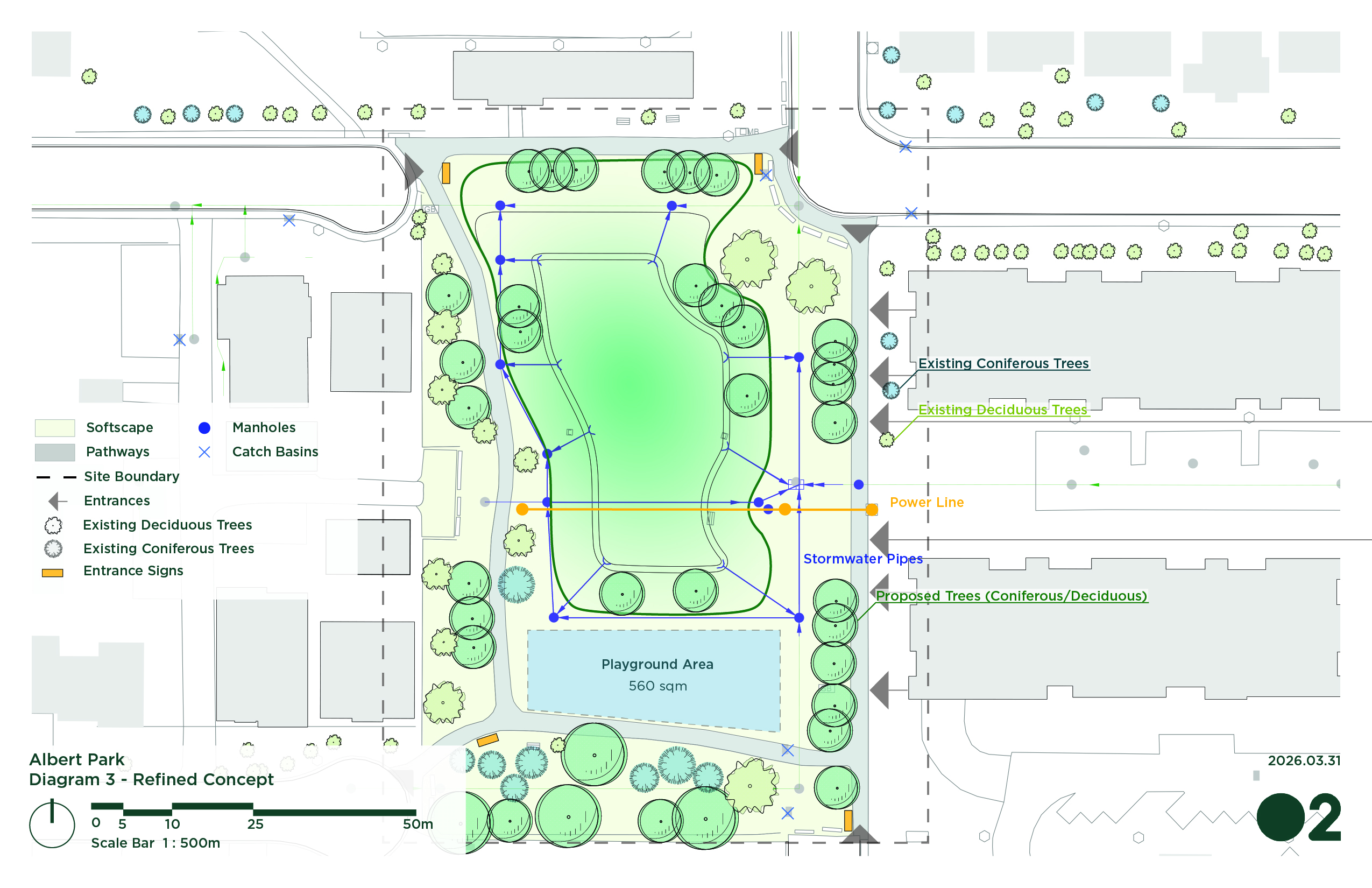
As part of redeveloping Albert Park’s greenspace to accommodate a dry pond, we want to know how the community currently utilizes the space and what future uses could be envisioned, within the constraints of meeting stormwater management goals.
The City is looking for input solely on the current or future usage of the park space, rather than the drainage project’s design. Ultimately, our goal is to accommodate a greenspace that is not only functional for drainage purposes but also for recreational and leisure use. There will be constraints to certain uses allowable and need to align with budget and space availability.
Note: An off-leash dog park is not compatible with a dry pond space and will not be considered for this area.
Playground redevelopment:
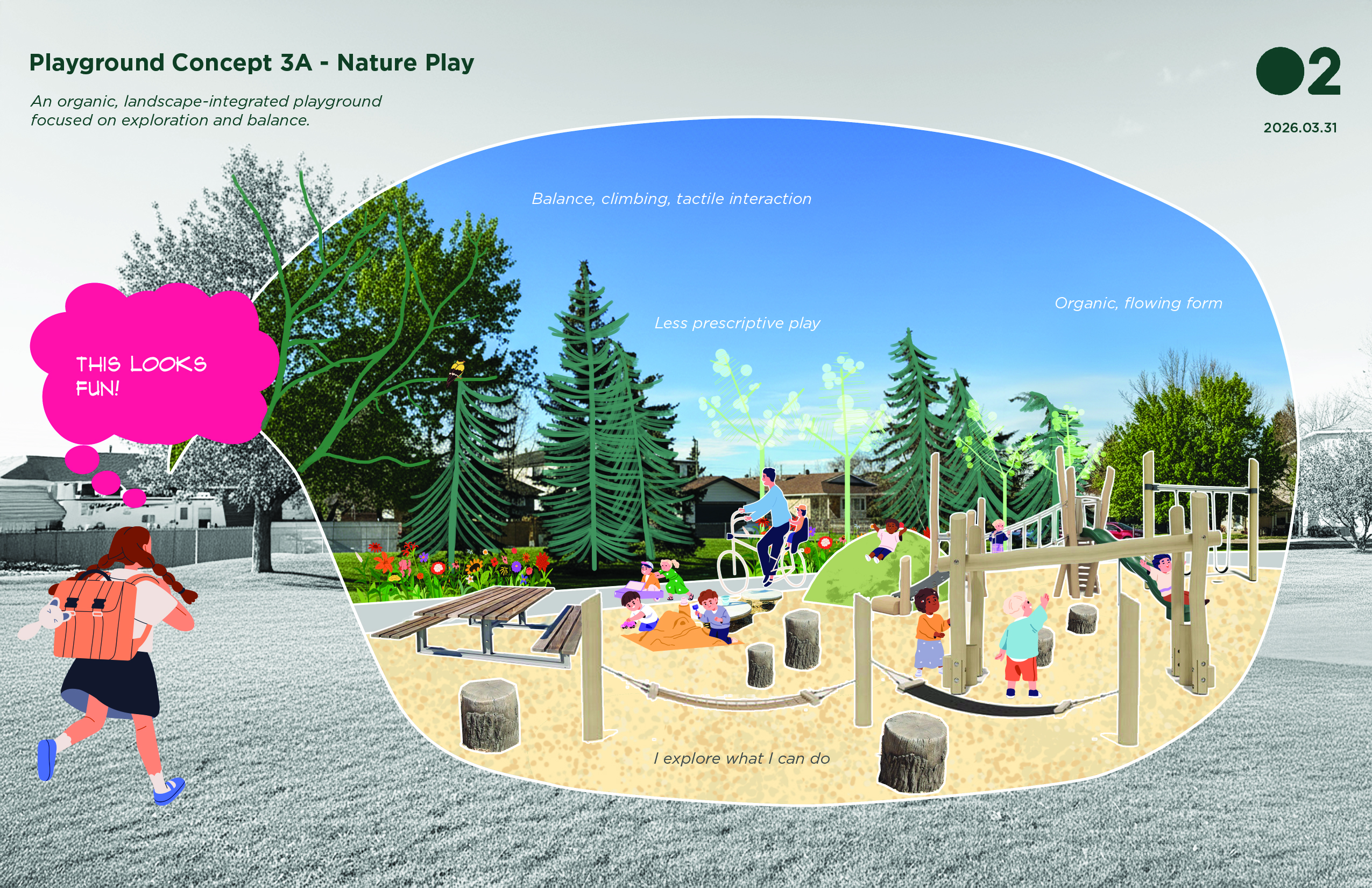
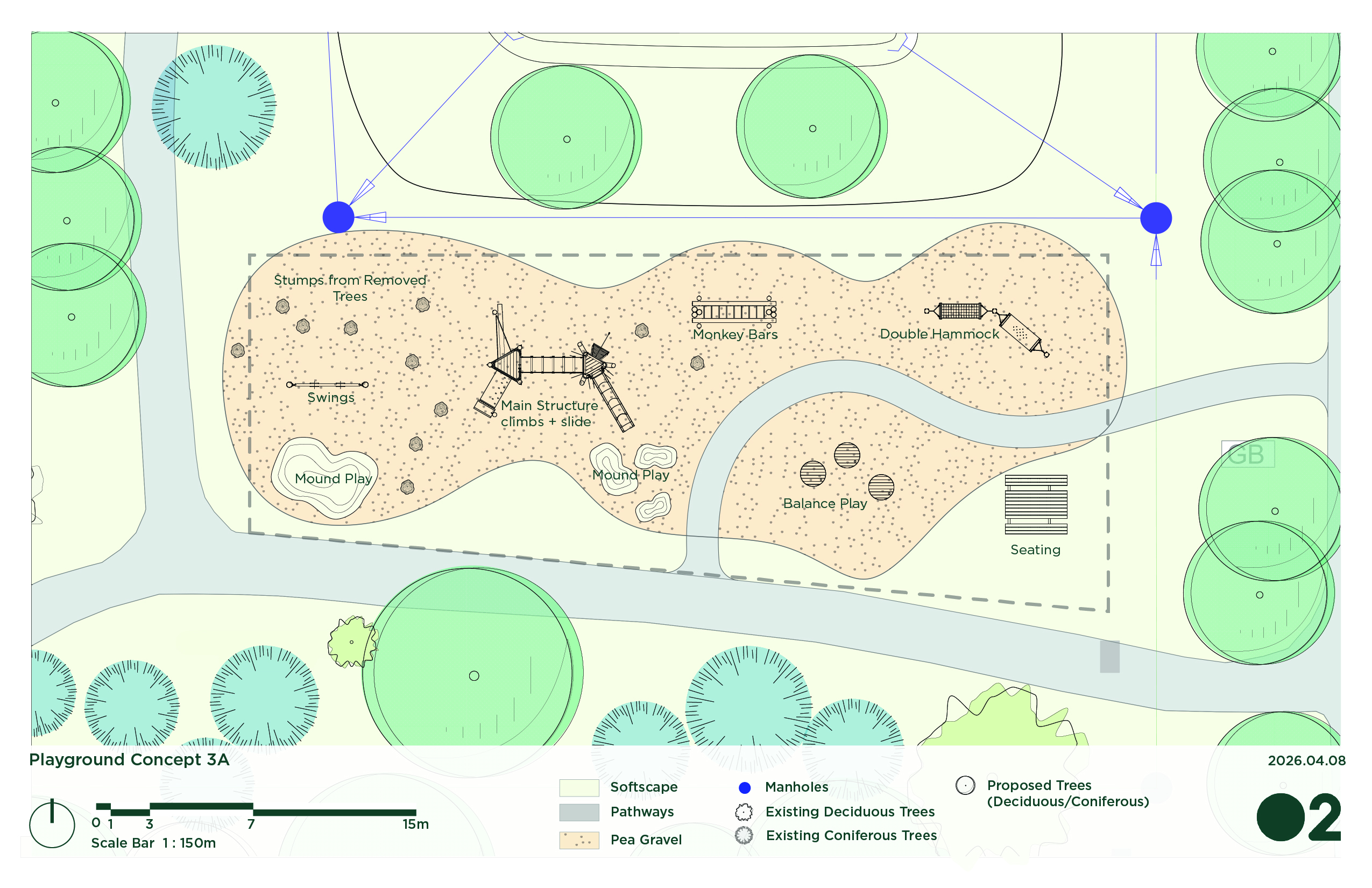
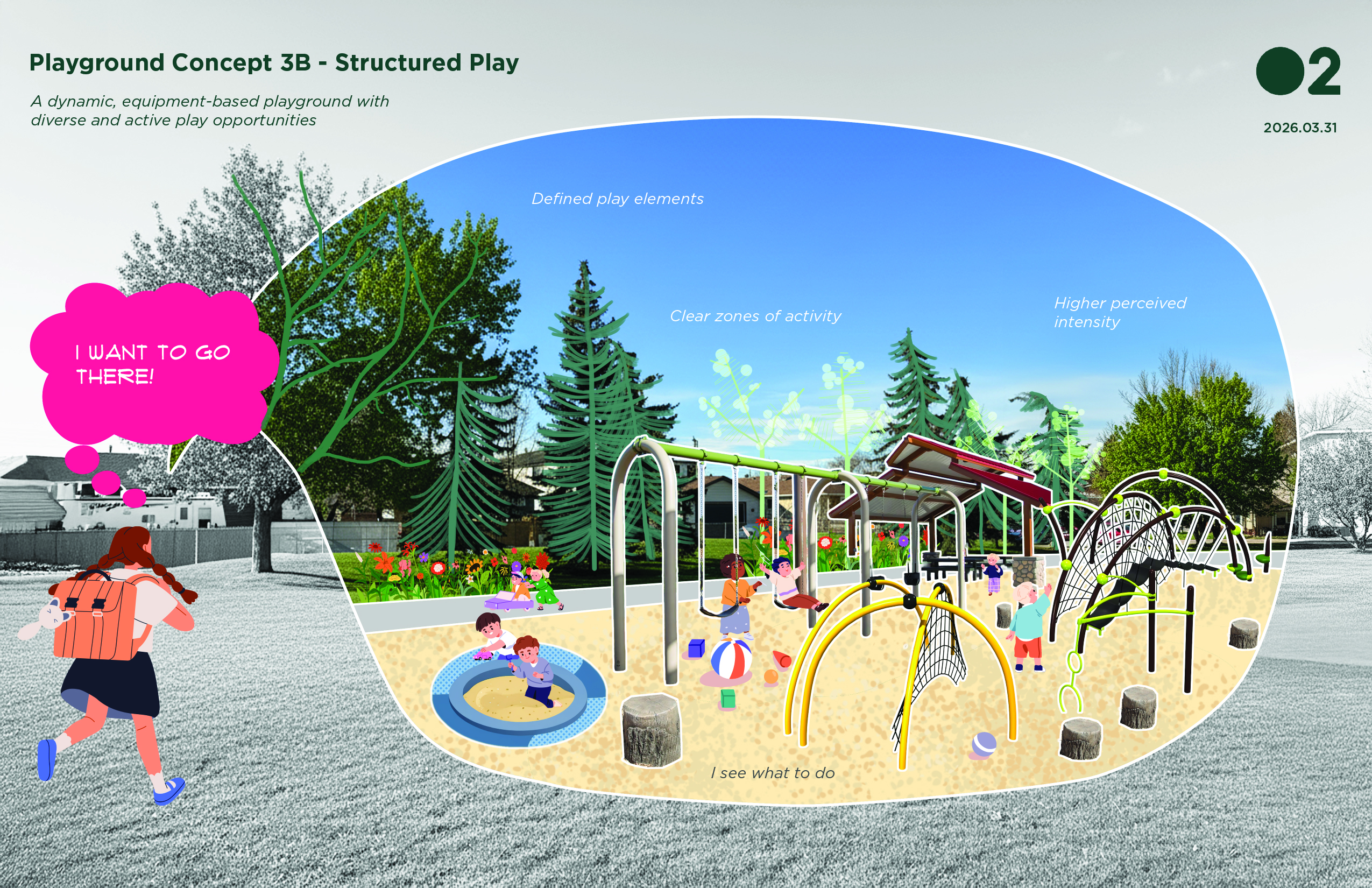
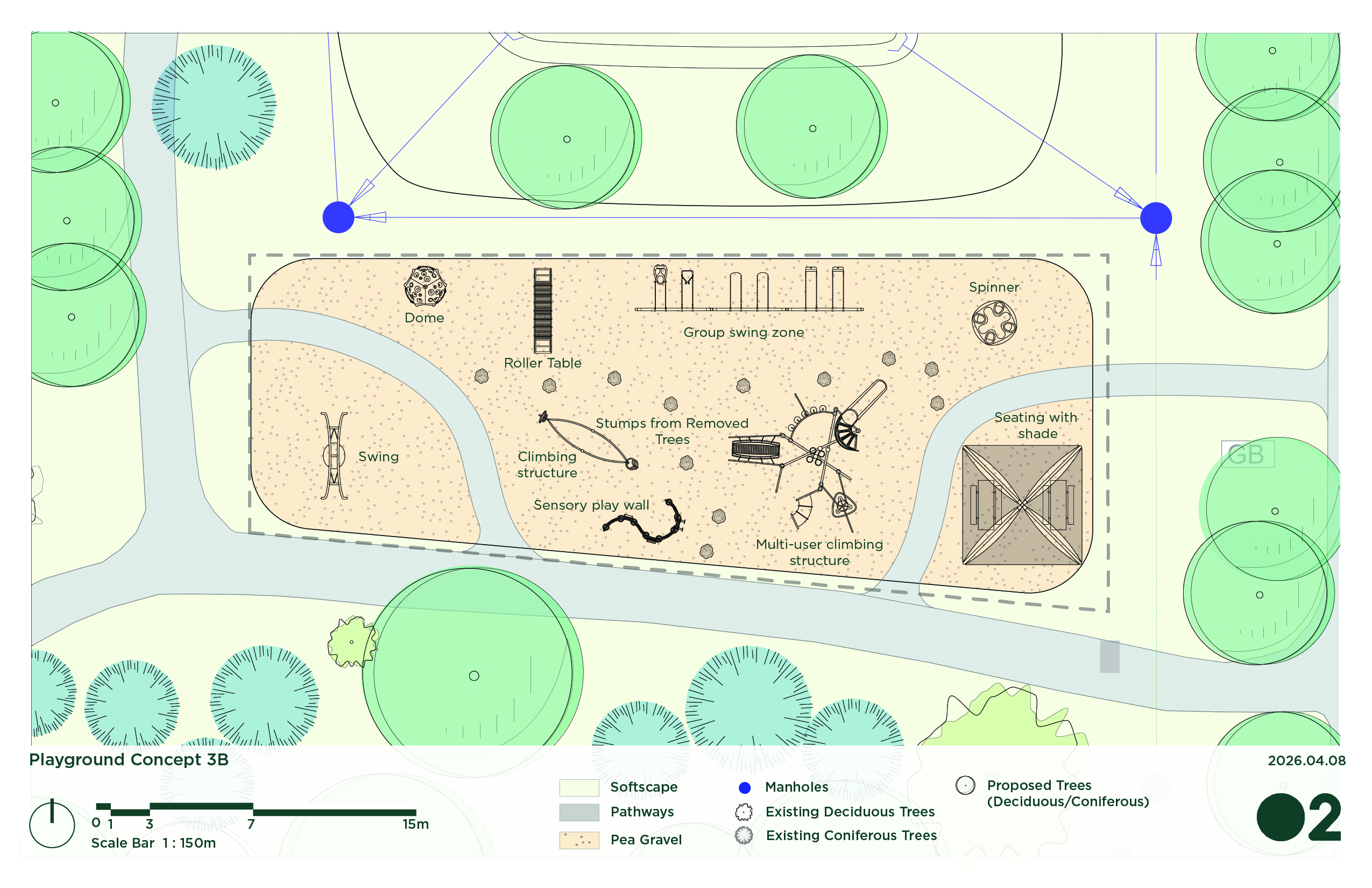
A part of this project involves relocating the existing playground to a slightly different location, as noted in concept re-design layout, on site to accommodate the dry pond. This presents an opportunity to improve the playground with new equipment. You can view the concept images of the potential designs below.
Our engagement period has now closed, thank you for your time and input. Please check back here for a WWH (What We Heard Report) in about 10 days.
Next steps
We will be providing opportunities for input in alignment with the timelines provided and will utilize that feedback in our decision-making process, as shown on this page.
We will commit provide reporting and updates as we work through this portion of the process in determining design options. We understand that the change process with any park redesign can be disruptive, but we want to create a space, and project process, with a balanced approach to meeting goals and providing a space to meet the needs of the community.