Evaluation Process
Below are the four options the project team reviewed for the Red Line South Extension. Each option was reviewed using a set of technical, financial, economic, environmental, and community-focused criteria to understand its benefits, opportunities, challenges, and trade-offs between the options.
Due to the constraints and available land in the area, Options 1-4 are nearly identical between Somerset Station and 194th Avenue, as there is a natural corridor available through this area, and the location of the future Silverado station has been planned for a long time. As a result, the evaluation below focuses specifically on the location of the 210 Avenue station, the Maintenance and Storage Facility (MSF) site, and other related considerations, such as the possibility of further southward extensions.
If you have any questions about the evaluation process or how the preferred option was chosen, please scroll to the bottom of the page.

Why Option 3 Was Chosen
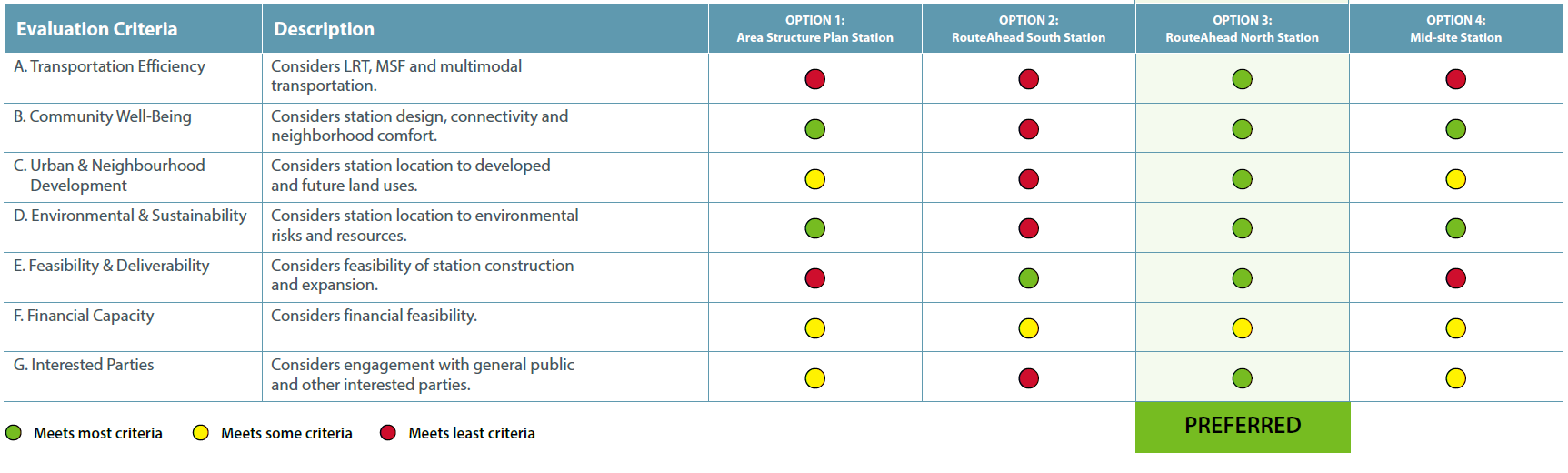
The preferred option (Option 3) was chosen because it provides the best balance of benefits for the community and future transit users. It will deliver high-quality transit service with well-designed station facilities, including a park and ride and bus terminal. The dedicated LRT corridor reduces future risks and helps the system run more efficiently, while also minimizing noise and visual impacts for nearby residents. This option supports safe and accessible walking, wheeling, and transit connections, aligns with feedback received during Phase 1 engagement, and offers similar construction, operating, and maintenance costs compared to the other options.
The table below shows how each option performed against these criteria using a green (meets most criteria), yellow (meets some criteria), and red (meets least criteria) rating system.
What We Did With Feedback From Phase 1
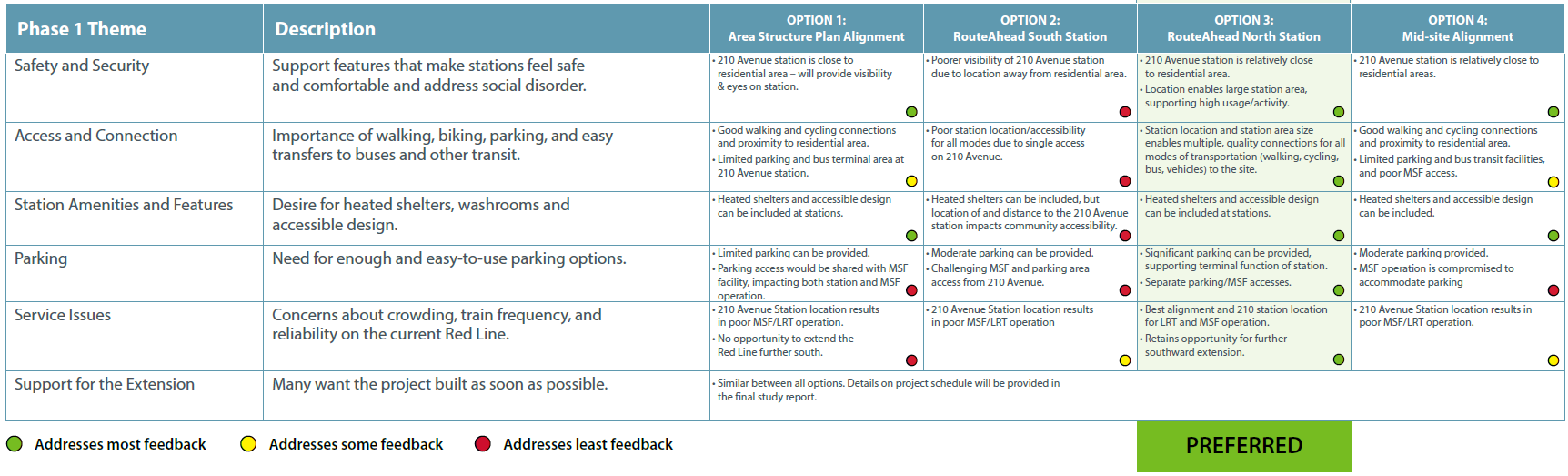
Community feedback from Phase 1 engagement played an important role in the evaluation process. Calgarians shared what mattered most and this feedback helped guide decisions about the recommended route and station layouts.
The second table below shows how the top themes from Phase 1 directly influenced the selection of the recommended option.
Q&A (Questions & Answers)
Do you have any questions about the evaluation process or how the preferred option was chosen?
To ask a question you must create an account or log in.
These are the people that are listening and responding to your questions.
Red Line LRT Project Team
{{question.description}}